
Docudrama Cinematography
Inside the Sony Docudrama Workshop in Saudi Arabia
Mohammad Abu Alula
1/17/20263 min read
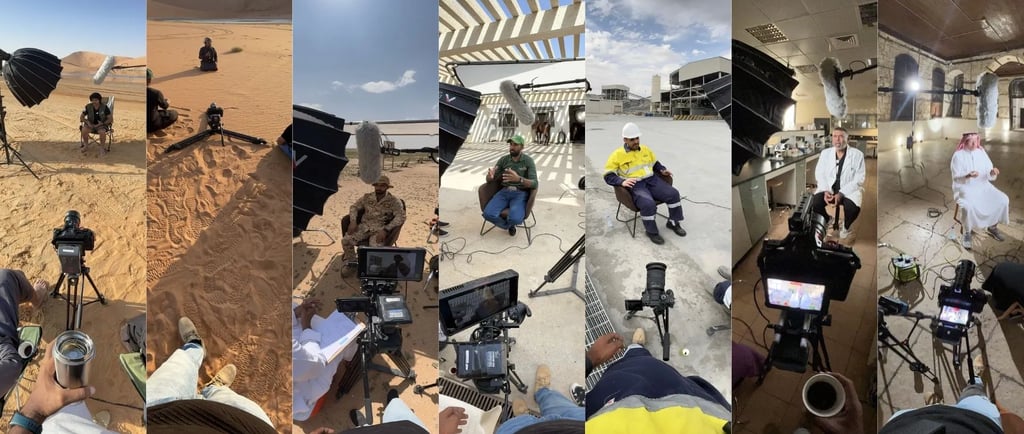
Inside the Sony Docudrama Workshop in Saudi Arabia
In an era where content is everywhere and authenticity is increasingly questioned, docudrama has emerged as one of the most powerful cinematic forms for telling real stories with emotional depth.
In collaboration with Sony, I recently conducted a Docudrama Cinematography Workshop in Jeddah and Riyadh, focusing on how cinematographers can approach docudrama as both a technical craft and a philosophical responsibility.
This article expands on the ideas presented during the workshop and serves as a practical and conceptual guide for filmmakers, cinematographers, and storytellers interested in nonfiction cinema.
Why Docudrama Matters Today
Audiences today are visually educated. They can recognize artificial emotions, forced narratives, and manipulated realities.
Docudrama responds to this shift by offering truth with cinematic discipline.
Unlike pure documentary, docudrama allows:
Visual composition
Controlled lighting
Structured storytelling
Reenactment when necessary
But unlike drama, it refuses to lie.
This balance is fragile—and that is why cinematography becomes central, not decorative.
What Is Docudrama?
Docudrama is a cinematic approach that presents real-life events, real people, and real consequences, while using the visual language of cinema to enhance clarity and emotional engagement.
It is not:
Fiction pretending to be real
Documentary trying to be dramatic
It is a visual interpretation of reality, grounded in honesty.
Docudrama is not about showing everything—it’s about showing truth responsibly.
Documentary vs Drama: Understanding the Spectrum
One of the first foundations of the workshop was understanding where docudrama sits between two extremes.
Documentary
Observational
No actors
Events happen once
Reality leads the story
Minimal interference
Drama
Scripted
Actors
Controlled environments
Repetition and retakes
Emotional manipulation is allowed
Docudrama
Real stories
Cinematic interpretation
Ethical responsibility
Selective reenactment
Director-led perspective
Docudrama borrows tools—but never excuses deception.
The Opposite of Drama
One of the more provocative ideas discussed in the workshop was this:
Documentary is the opposite of drama.
Drama creates life.
Documentary listens to life.
Docudrama must always lean toward listening—even when the visuals are cinematic.
Who Is the Hero of a Docudrama?
In traditional storytelling, the hero is the character.
In docudrama, the hero is the Director.
Why?
Because the director:
Chooses what to show
Chooses what to hide
Decides perspective
Bears ethical responsibility
The cinematographer’s role is to serve that point of view visually, without overpowering it.
Docudrama Is Built From Life Experience
Docudrama is not something you “invent.”
It comes from:
Observation
Patience
Human access
Cultural understanding
This is why the workshop emphasized:
Working in your city first
Your neighborhood
Your environment
Truth is closer than you think.
The Production Process Starts With Distribution
One of the most unconventional—but critical—ideas presented was reversing the traditional production order.
Before asking:
“What is my idea?”
Ask:
“Where will this film live?”
Distribution platforms influence:
Duration
Visual density
Camera movement
Sound priorities
Narrative rhythm
A docudrama made for cinema is not the same as one made for digital platforms.
Ignoring this early leads to compromised films later.
The Two Scripts of Docudrama
Docudrama lives with two scripts:
Script Before Shooting
Intention
Research
Structure
Questions, not answers
Script After Shooting
Written in the edit room
Based on what reality revealed
Often contradicts the original plan
As Albert Maysles famously said:
“If you end up with the film you started with, then you weren’t listening along the way.”
Listening is cinematic discipline.
Filming Order in Docudrama
To protect authenticity, the workshop introduced a preferred filming order:
Interviews
B-Roll
Verité (observation without interference)
Drama / Re-creation (only when necessary)
This order ensures reality leads, not reconstruction.
Sound Is More Important Than Image
One statement in the workshop received strong reactions:
Sound is more important than image.
In docudrama:
You can forgive shaky footage
You cannot forgive bad sound
Sound carries:
Emotion
Truth
Time
Memory
This includes dialogue, ambience, silence, and off-screen space.
Timecode and Truth
Timecode is not just a technical tool—it is a truth-preserving mechanism.
In docudrama, timecode:
Protects long takes
Preserves real timelines
Allows multiple cameras and sound sources
Respects moments without interruption
When reality happens once, you must be ready.
Choosing the Right Camera for Docudrama
Camera choice is not about resolution—it’s about trust.
Key considerations discussed:
Reliability
Speed of operation
Low-light performance
Battery life
Audio integration
Ability to always keep rolling
A good docudrama camera disappears during production and becomes powerful in post.
Small Teams, Big Responsibility
Docudrama thrives with small crews:
Director
Cinematographer
Sound Recordist
Fixer
DIT / Assistant
Small teams mean:
Access
Speed
Intimacy
Safety
Every crew member carries ethical weight.
Common Mistakes in Docudrama
Some mistakes discussed openly in the workshop:
Over-stylizing reality
Forcing narrative conclusions
Excessive gear
Interrupting moments
Forgetting honesty
Your honesty is your most powerful cinematic tool.
Why Sony and Docudrama Align
Sony’s ecosystem has become deeply connected to modern docudrama filmmaking due to:
Compact professional cameras
Strong low-light performance
Color science suited for natural skin tones
Integrated audio workflows
This workshop was not about selling tools—but about choosing tools that respect reality.
Final Reflection
Docudrama is not safer than drama.
It is not easier than documentary.
It is harder—because it demands:
Ethics
Listening
Responsibility
Cinematic restraint
As a cinematographer, my role is not to beautify truth—but to protect it visually.
This Sony workshop in Jeddah and Riyadh was a step toward building a deeper, more honest docudrama culture in Saudi Arabia—one story at a time.
Workshop Link in Jeddah :
https://www.alphauniverse-mea.com/event-detail-offline/the-story-behind-the-docudrama-film-tv-shows
Workshop Link In Riyadah
I will add Links For Level 2 Of the Docudrama workshop in a different blog